Showing posts with label church year. Show all posts

24 September 2013

drawing the year

In my last post, I showed some seasonal drawings I'd done with a five-year-old friend.


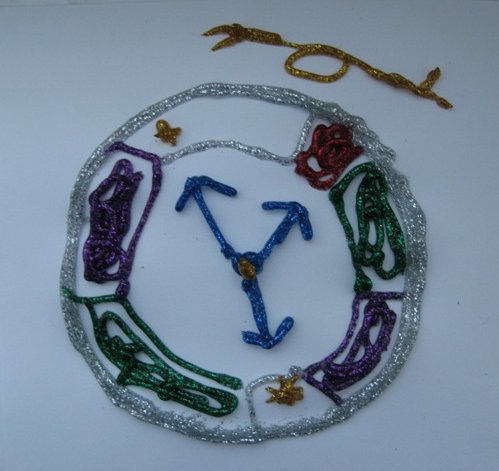
I wonder if anyone noticed the little circles in the upper left of each picture. Remember my presenting the lesson about the liturgical year this summer? Well, my friend certainly did! As soon as I began to explain that I wanted to make pictures for the seasons of the year, she made the association. She pulled out a red tube of glitter glue and explained that it would ideal for that one red square that is HOT.

Even after I explained that I wanted the four seasons of Spring, Summer, Winter, and Fall (rather than the liturgical seasons like Pentecost), she could not shake the memories of the Godly Play lesson. You can talk about how time is in a line and also in a circle, she offered. [This is how the Church Year lesson begins.]

Our solution was to draw the Circle of the Church Year in the corner of each seasonal picture. I suspect that this association may be why she decided to put even our large seasonal symbols in circles.

She also carefully drew churches inside the "church clocks":


She explained to me as she drew, this is the door and this is the window, but I didn't pick up on what she was doing fast enough. So the next church was extra-elaborate:


See that passage between the two doors? That's where the WCs are!

22 August 2013

Godly Play in a home

We made a brief visit back to Finland during the summer. Sadly, our pastor has been unable to continue offering weekly services, so our congregation now meets only twice a month. The Sunday we were there was one of the Sundays when there was no service. So I organised a sort of "house church" Godly Play session with one of the families whose children used to come to Junior Church.

I made a focal shelf in their living room. 


Ahead of time, I had asked the children each to request a set of story materials they'd like me to bring. I used these, as well as some of the family's own possessions (like a storybook about Jonah), to surround us with stories the way a Godly Play classroom does.


I presented the Circle of the Church Year and we had crayons to use during Response Time. During our feast we listened to the passage from Ecclesiastes about there being a right time for everything, and we had a short time of prayer. I asked the parents what hymns they would like us to sing together, and we used those to open and close our service.


The children had lost some of their sense of how we used to do things, and found it a little difficult to settle down in the space they usually use for play and watching tv, but one thing I really notice from the photos is the way the children moved closer and closer to the story materials as I presented the lesson. They were literally drawn in!

21 June 2013

"the Church's Colours"

I happened to pick up a little booklet we have, called A Pocket Guide to the Anglican Church, and noticed for the first time the section on liturgical colors. I like the use of the verb "wears" here:

----

The red, green and amber of traffic lights control the flow of traffic because motorists understand what these colours mean. Similarly the green/yellow, brown and blue wires in an electric cable indicate which wire is earth, live and neutral. 

The Church has used colours since the 12th Century to tell the faithful the sort of mood she is in. There are four principal colours, viz violet, white, red and green.


underlays for the Holy Family on the focal shelf
When the Church wears:

Violet she is in a solemn mood. Violet is the colour of penitence and is used particularly for the seasons of Advent (the four weeks before Christmas), and Lent (the forty days before Easter).

White she is in a happy and festive mood.

Red she is commemorating the death of someone who shed his [or her] blood for the Faith. We call these people martyrs. Red is also the colour used on Whitsunday, because it symbolizes the tongues of fire. 

Green she is in a natural mood. Green is the colour of nature and is used during the seasons of Epiphany and Trinity. 

----


from A Pocket Guide to the Anglican Church, p.43
by Ronald H. Lloyd
first published 1980, revised 1988 

I added the words "or her" myself! :)

10 February 2013

What about Epiphany?

My apologies - this post would have been more timely had it appeared about a month ago. But I've decided against waiting another eleven months to post it!

----

I've only just discovered Chuck Knows Church, a series of comically informative videos about church customs, especially those of American liturgical churches. I should warn you Godly Play folk that they're not at all Montessorian. But I've gotten a kick out of them.

Here's the first of the series, on the topic of Liturgical Colors:


I quite like the parallel that Chuck draws between Epiphany and Pentecost, one which isn't made in the Circle of the Church Year (Godly Play) lesson. On the other hand, the Godly Play lesson does introduce the less obvious observation that just as Lent prepares us for Easter, so also Easter prepares us for Pentecost. So there are positives to be found in both lessons.

The Circle of the Church Year, like other Liturgical Action lessons, is meant to be adapted to the customs of the church in which you present it. As written, it reduces Christmastide to a single week or even day, and ignores Epiphany altogether. That works reasonably well if you're in a tradition or denomination which goes straight into Ordinary Time after Epiphany, but is more problematic for those of us in the Church of England, for example, who observe Epiphanytide (and use white as our liturgical color) right the way up until Candlemas in early February. Repainting the blocks would be simple enough, but adapting the words of the script is trickier.


artwork done by a young teen during Response Time

I'd be interested to hear from those of you who observe Epiphanytide: How do you present the Circle of the Church Year?

(For what it's worth, here's what I've done in the past.)

16 November 2012

visualizing the Circle of the Church Year

For a while I was changing the image at the bottom of my blog screen according to the liturgical seasons, inspired by Emily at Watkins Every Flavor Beans. This year I found it easier just to stick with one image of a circular calendar by My Faith My Life. So I appreciate that Browniesmoke (at What Can We Leave Out) has linked to the new coming year's calendar, now available at My Faith My Life. (Lo hay también en español.)

© 2012 Jenifer Gamber.
Permisson granted to
reproduce for church use.
I echo Browniesmoke's advice that even if some in your family (such as children doing Godly Play or Catechesis of the Good Shepherd) already understand liturgical colors, this calendar can help others (such as grown-ups) grasp it. It's also interesting for older children in that it is more detailed than some GP classroom presentations will be, since it has a square for every day, not just for every week.

Bear in mind if you're outside the United States that it's been created for the Episcopal Church so may not entirely match your own church's practices.

Thanks, Jenifer, for sharing this resource!

27 May 2012

preparation through celebration

The Godly Play lesson of the Circle of the Church Year presents a concept which I had never heard before - that just as Advent helps us get ready for Christmas and Lent for Easter, so Eastertide helps us get ready for Pentecost. Eastertide is simultaneously a time of celebration and a time of preparation.


Preparation through celebration - what a gorgeous thought.


I have heard people puzzle or even fret over the fact that Advent is not a season of fasting nowadays. But the folks at Busted Halo revel in the richness of the differences between Advent and Lent: Advent is about Hope, not Repentance, they sayAnd how delicious it is to think that we prepare for Pentecost with celebration.

Sheila (of Explore and Express) and I have celebrated Eastertide this year with a series of guest posts. Our final one is coming soon, but in the meantime I'd like to share a photograph from my friend, "see-through faith". In addition to her regular blog she has a photo blog, where her goal is to post a photo a day and to "find God" in it. One recent photo was of a seasonal table display, which instantly made me think of  seasonal displays that my blogging friends have created - including Sheila's nature tables and Emily's displays marking the church year (such as this wonderful Ordinary Time collection of everyday green objects). Can you guess what the difference is between their displays and this one?

photo by see-through faith - a larger version can be seen here

This one wasn't in a private home but in a church building! Isn't it sweet? It's "homely" in the British sense ("homey" for Americans). Charming! It's from the Bakewell Methodist Church, home to  Matthew Loader, who wrote a series of guest posts for me last month.

My friends, whether your Eastertide celebration has been simple and sweet, solemn and grand, or felt cursory, dry, or difficult, I pray for you a joyful Pentecost.


Here's Busted Halo's Pentecost in two minutes video. 
[I posted about their Advent one here and their Lenten one here.]

09 May 2012

Eastertide guest post - An Eastertide Garden

This week's guest is "Featherglen", one of the early participants in our Lenten link-up. She and her husband both work as members of the L'Arche community in Inverness. Her sidebar list of topics shows her major concerns to be her faith, her family, handicrafts, and the L'Arche Community. Featherglen's life sounds very romantic - living in the Scottish Highlands, married to a French jeweller and gardener, members of an international movement building faith-based communities with people with learning disabilities, supporting them to reach their full potential... yet her writing is honest and down-to-earth.

As a mother, member of a L'Arche Community and a church, Lent can, ironically, turn into a very full time. Although this is usually in a good way, by the time Easter has arrived and been celebrated in various ways, I'm ready for a break. However, despite not growing up in a liturgical tradition, I have grown to appreciate many aspects of such a way of worship, Bible reading, and the sense of celebrations in their appropriate times. This is sometimes also very helpful for the adults with learning disabilities that  are at the heart of L'Arche. Advent and Lent are two very important times of the year for us and we take time to deepen our relationship with God during them. I came across Godly Play when looking for ways to share the biblical story creatively, and it seemed to be instinctively right for us. One story I love in Godly Play is the Circle of the Church Year and as a family we have been very struck that 'You can't keep Easter to just one Sunday, so it keeps on for six more weeks'. I find it very liberating knowing that there's no hurry to celebrate Easter - we have all the time we need!

all photos by Featherglen, please do not re-use without her permission

 In our family we made a 'Lent garden' - a large plate filled with sand and a bare branch, along with a wooden figure of Jesus, representing his time in the wilderness. It sat on our kitchen table and we added a stone each day at dinner time. By Palm Sunday we lifted out the stones, added some soil, then replaced the stones into a path to the bare branch. We sowed some wheatgrass seeds and made a tomb from clay, giving it time to dry out. A cross was added on Good Friday.


On Easter Saturday we added in a another tray of soil for the tomb to sit on, along with a big rock (the wooden figure was placed inside). We sowed some more seeds and added jars and vases of green branches and flowers, as well as Easter candles and some animal figures.


It was all ready and beautiful for Easter Sunday breakfast, with the stone rolled away, the candles lit and Jesus was once more in the beauty of the garden, now transformed from rock and soil, a living image that 'a grain of wheat remains no more than a single grain unless it is dropped into the ground and dies'.


But this year, instead of keeping it for a week or so as usual, I decided we should try keeping it for the whole of Eastertide. It seems like a simple focus, without too much extra effort, to remind us of the Resurrection. We moved onto a table in our living room, covered with oilcloth. Each week we water it, snip the grass (my son likes this bit) - and feed it to the guinea pig (who is very appreciative!). We gather fresh flowers and leaves. It has been lovely to see a whole range of spring flowers this way and I have been surprised by how well my two boys arrange them. I have a book ( The story of Jesus by Andrea Skevington - I recommend it!) with some good artwork, propped up behind it. From time to time we read the stories of the resurrection, and we have added another figure to the garden - perhaps it is Mary?

I have made Easter gardens before, but this year, having one that stretches all the way from Lent through to the end of Eastertide, is a new expression of our journey with Jesus, that has a nod to Godly Play and a connection with the spring world around us.


Featherglen's written a second post for Sheila and me as well, which will be posted tomorrow. This next post is about the Road to Emmaus.  

05 February 2012

the one who was, and is, the light

In the story we remember on Candlemas, 
it says that many, many years before Jesus himself told people, "I am the light," 
a man named Simeon said that Jesus would be a light to the People of God 
and to everyone else, too. 


And so even though this is a green week in the church calendar,


today the color is white.


01 January 2012

materials - familiar and unfamiliar

Today three sets of story materials got used during Response Time - that's a record for us! Some children who had never worked with the church clock before wanted to have a look. But my explanations were too long-winded and they quickly lost interest!

photo by seethroughfaith (cropped by me)

One of the children chose to work with the Advent and Christmas materials instead. The other set off to draw. Meanwhile another child noticed seethroughfaith getting out the desert bag, and asked if she could look on and/or work together with her on the Great Family story. [This is the rule with story materials - you must always ask permission because the person might want to work alone.] They realized they couldn't remember certain details anymore, and turned to the Jesus Storybook Bible to remind themselves a bit.


I believe that in most GP classrooms, the expectation is that if you haven't worked with materials before, you should sit and listen to the lesson as presented by the storyteller (who will be happy to present it to you during the Response Time). I have not been as explicit or strict as that, but have always said that you should ask me or any of the children who already know the story to tell you about it or help you with it. The problem is that children don't feel that they know most stories well enough yet to present them to a peer.  Even "stf" felt more comfortable looking up some of the Abraham and Sarah story when working with another person. But on the other hand, children weren't ready to sit and listen to another whole lesson (about the Church Clock) right after having listened to today's Christmas lesson. 

I'd be interested to know what others of you do about children who show interest in unfamiliar materials. 

06 November 2011

circle-calendar of the church year

[I've written this post in advance.] Today, Sunday, I'm on a residential weekend for ministry training and Vandriver is leading Junior Church (reading aloud from the Jesus Storybook Bible).

As we're getting ready for Advent and the new church year, I wanted to publicize this wonderful resource from My Faith My Life.

©2011 Jenifer Gamber; permisson to reproduce for church use
It's a beautiful rendition of the circle of the church year in all its colors, along with the corresponding dates from the calendar year. If I had loads of time (which I don't) it would be tempting to try to put together something similar to this myself, with tweaks (such as purple for Advent) to bring it into line with our congregation's practice. But as it is, perhaps I will just print this out to have in the room as a talking point. A high-quality pdf is here. Many thanks for Jenifer Gamber for making this available to churches!

08 August 2011

getting ready for Fall

(photo by stf)
We were back in Junior Church yesterday for the first time since Pentecost (me) or Trinity Sunday (the children). This was a sort of "taster" before we start up properly in a couple of weeks. I told the Holy Family story and we had an extra-long work session.

Because I'm starting ministry training, I won't be able to continue leading on a weekly basis, and stf will also be unavailable for much of this year. But stf has kindly volunteered to kick off the autumn schedule with a session on the 21st. I've got a Sacred Story curriculum planned for the autumn (including both Godly Play stories and Bible-based children's stories for reading aloud), and I believe that several parents are willing to help out in order to keep Junior Church going. We're still looking for leaders and especially adult helpers to ensure that we can offer sessions every Sunday, but it's looking good!

The children came in as if it has been no time at all since we last met. The room was familiar to them and they fell comfortably into familiar routines, most of them being the way we ( = I ) prefer to do things, and a few being behaviors that I'd like to curb - *wry grin*. We had two new children in the circle, and after the session they told their mother that they'd like to come regularly!

When it was almost time to go home, a grandmother, visiting from abroad, helped me clear up. Her grandson came into the room again as well, and acted as a guide for her. I was amazed and delighted that he identified the Pentecost story (I haven't blogged about this yet, but I felt that my presentation of it was not a success), even using the word Pentecost.  He also answered her questions about the Church Clock (It's about telling time. These are all the Sundays, and this is Christmas).

Here's a photo of the two of them looking at the Advent / Christmas materials:


Heavenly Father,
please guide us this Fall.
Provide the leaders and helpers we need.
Reveal yourself to your children, young ones and grown ones.
Help us to recognize the Green Grass and Cool Water that you shepherd us to,
And give us courage and wisdom for the dangerous places.
We pray in Jesus' name, Amen.

07 March 2011

art responses this week

This week I had hoped to snap some photographs of hands in action during the Response Time, but there was just too much going on and I never had a moment to even remember that I'd brought a camera with me. So I didn't get any photographs of our new rolling pin (for the clay/plasticine) or of the child who was the first (ever) to start working on a cut-and-paste collage. But I did snap a few pictures of the glitter glue paintings as they were drying after class. 


So far I have permission to display two of the three photographs I took. The mother of the artist who said no thinks that the child might reconsider after seeing the blog. But I told the child that sometimes church stuff feels kind of personal and private and that's okay. So possibly a third photo will appear here in a day or two. But if not, then be happy that the child has felt comfortable saying no


Notice the purple carefully placed in the corners

If you know this lesson you'll understand the inclusion of the gold cord

telling time by colors

Sunday’s lesson was The Circle of the Church Year, also sometimes called The Church Clock, or How the Church Tells Time. In many GP classrooms it is told early in September, but my children hadn’t heard it before, and I thought it would be a good lesson to pave the way for Lent. There’s loads in this lesson, including the three great festivals of the church, the truth that we need time to get ready to come close to a mystery, and a memorable name for the many Grreat Grreen Grrowing Sundays.

This is the only set of materials (so far) that I’ve bought ready-made from a Godly Play supplier. I bought them during the European Godly Play Conference from the German producerDifferent producers’ sets vary slightly (but importantly) in how many blocks of each color there are:

http://stores.godlyplayresources.com
http://www.stmichaelsworkshop.co.uk
http://www.godlyplay.fi
http://www.garageshopblog.org
Jerome W. Berryman says, As you order the material or prepare this lesson, please adjust as needed to match the colors actually used in your church. Unfortunately, I didn’t have access to the Finnish-language version of this lesson to see how they present typical Finnish Lutheran practice. Instead I spent a lot of time poring over the appendix in the Finnish hymnal, trying to reconcile that with the fact that our Anglican priests’ practice is different both from Berryman’s and from the Lutherans’. And I needed a presentation that would be simple enough for the small children, without being incorrect enough to disturb the thirteen-year-old or my adult helper. (Not to mention a difficulty which nobody seems to address – that there are 52 blocks, but one of them is supposed to represent Christmas Day, which only rarely falls on a Sunday!) 

Here’s what I ended up doing: I followed Berryman in not referring explicitly to Epiphany. I said that Christmas, like Easter, cannot be contained in a single day, and used a single extra white block to represent that (without explicitly saying how long that white time lasted), while contrasting it with the many weeks of Eastertide. During this section I also tried to remember to use the blocks to represent weeks rather than Sundays.

my practice photo (roughly the final layout)
Do you know that Godly Play lessons and stories are always told by heart? I thought I had done pretty well on this one… until I realized that I'd completely skipped over and left out the part explaining what Pentecost is all about. Oops! But it was probably good to shorten it a bit, even if it was by accident. One of the children (at least one!) was getting antsy toward the end. On the other hand, though, two different children asked to work with these materials during our response time (the first time since moving to our new room that any children have chosen to work with the story materials). 

It was a pity to miss out on the Apostles glowing with the power of the Holy Spirit, but I think they got the message that For every beginning there is an ending, and for every ending there is a beginning.

06 March 2011

spot the differences

Here is what our focal shelf looked like a month ago:


Here's what it looked like today:


One difference is that for the February picture I remembered to kneel down so that the photo was taken from a child's perspective, whereas the March photo is my perspective. 

Several things have found their way into new or different baskets, but that's not important. What I really want you to notice is the new materials that have been added. The Good Shepherd and World Communion materials were new last time (two weeks ago). Do you see what was new today? Do you know what it is? I plan to tell you this week!